Why is my AC Freezing Up in Portsmouth, VA
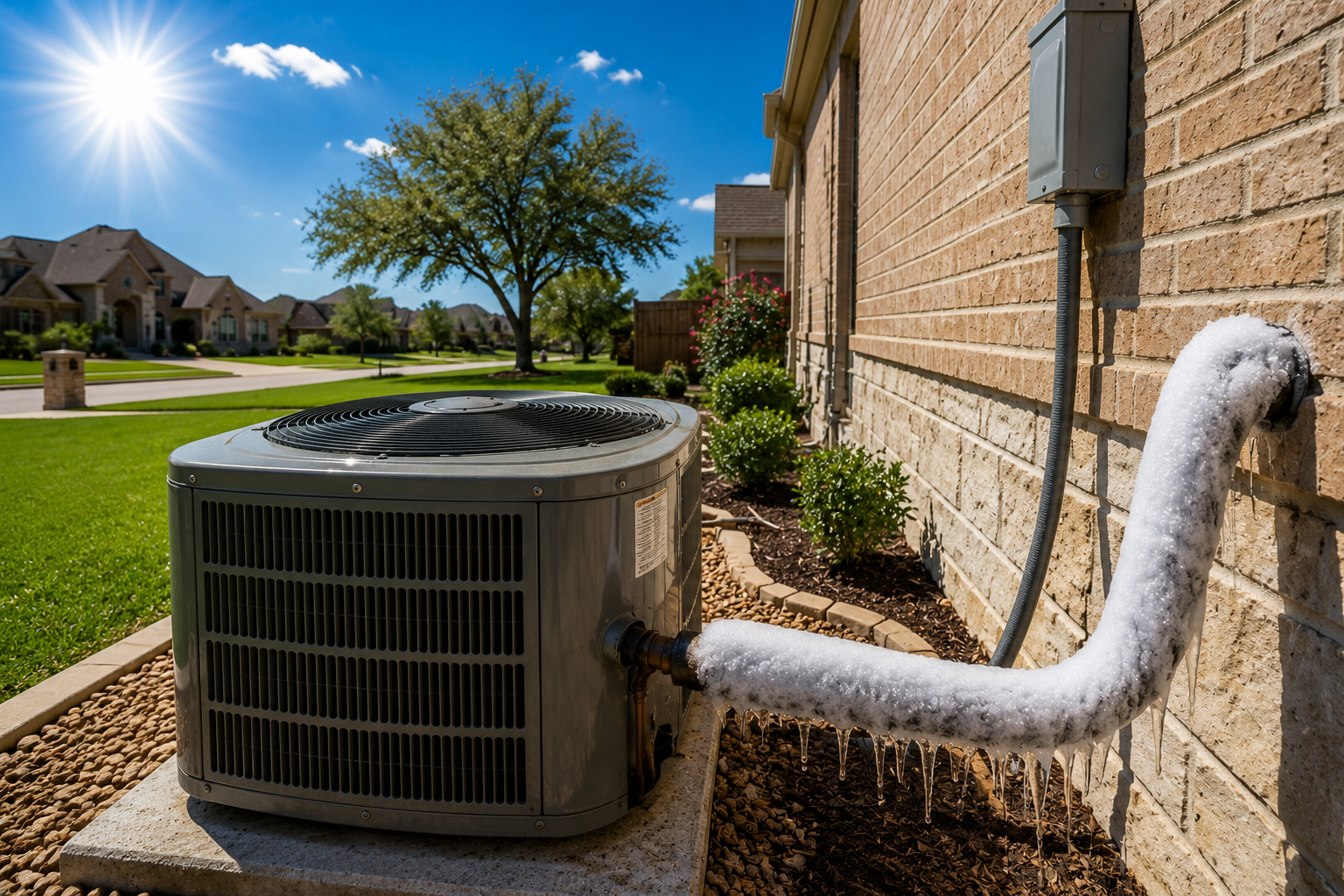
When temperatures climb in Portsmouth and throughout Hampton Roads, the last thing you expect to see on your air conditioner is ice.
It sounds strange. Your AC is supposed to make things cold, so why would ice on the system be a problem?
Unfortunately, a frozen air conditioner is one of the clearest signs that something isn't operating correctly. If you notice ice on the refrigerant lines, evaporator coil, or indoor portion of your HVAC system, continuing to run the air conditioner can make the problem worse and potentially cause more expensive damage.
Here's why an AC freezes up, what you can safely check yourself, and when it's time to call an HVAC professional.
What Does It Mean When an AC Freezes Up?
Your air conditioner removes heat from the air inside your home by moving indoor air across a cold evaporator coil.
Under normal conditions, the coil stays cold enough to absorb heat but not cold enough for moisture to freeze onto it.
When something interferes with airflow or the refrigeration process, however, the evaporator coil can become excessively cold. Moisture that normally condenses on the coil can then freeze.
Once a small amount of ice forms, the problem can snowball. Ice restricts airflow even further, causing additional freezing until the coil may eventually become covered in ice.
1. A Dirty Air Filter Is Restricting Airflow
One of the simplest causes of a frozen AC system is also one of the easiest to prevent: a dirty air filter.
Your HVAC system needs a steady supply of indoor air moving across the evaporator coil. When a heavily clogged filter restricts airflow, the coil may become too cold.
During a hot Portsmouth summer, your AC may run for long periods of time. That means considerably more air is passing through the filter than during milder weather.
Check your air filter regularly during cooling season. If it appears dirty or clogged, replace it with the properly sized filter recommended for your system.
Changing the filter may help prevent additional problems, but if the system is already heavily frozen, simply changing the filter may not be enough.
2. Your Evaporator Coil Is Dirty
Dirt and debris can also accumulate directly on the evaporator coil.
Even a relatively thin layer of buildup can interfere with heat transfer and airflow. As the system struggles to absorb heat properly, coil temperatures can fall and ice may begin forming.
Because the evaporator coil is located inside the air handler or furnace cabinet, cleaning it is generally something you should leave to an HVAC technician.
Professional cleaning can restore proper heat transfer while giving the technician an opportunity to check for other issues that may have contributed to the freezing.
3. Your AC May Be Low on Refrigerant
Low refrigerant is another common reason an AC can freeze.
Refrigerant doesn't normally get "used up" like fuel. Your air conditioning system is designed as a closed system.
If the refrigerant level is low, there may be a leak somewhere in the system.
Low refrigerant changes the pressure inside the evaporator coil and can cause its temperature to drop below normal operating levels. Moisture then freezes onto the coil instead of draining away as condensation.
Signs that may accompany a refrigerant problem include:
- Ice on the refrigerant line
- AC running for unusually long periods
- Reduced cooling performance
- Warm or only slightly cool air from the vents
- Higher-than-normal electric bills
- Hissing or bubbling sounds near refrigerant lines
Refrigerant problems require professional diagnosis and repair.
Simply adding refrigerant without determining why the system is low doesn't solve the underlying problem.
4. There May Be a Blower or Airflow Problem
Your indoor blower fan is responsible for moving conditioned air through the ductwork.
If the blower motor is failing, the fan is running too slowly, or another component is interfering with airflow, the evaporator coil may not receive enough warm household air.
The result can be a frozen coil.
You may notice weak airflow from the vents even though the air conditioner appears to be running normally.
Other airflow problems can include:
- Closed or blocked supply vents
- Blocked return-air vents
- Ductwork restrictions
- Dirty blower components
- Motor or capacitor problems
If airflow throughout the house suddenly seems weaker than normal, it's worth having the system inspected.
5. A Clogged Condensate Drain Can Contribute to Problems
Air conditioners remove moisture from your home's air while cooling it.
That moisture normally collects in a drain pan and exits through the condensate drain line.
Portsmouth's humid summer weather means an AC system may remove a substantial amount of moisture from indoor air. If the condensate system becomes clogged or isn't draining correctly, you could encounter water around the air handler along with other cooling problems.
Drainage issues don't always directly cause a frozen evaporator coil, but moisture and airflow problems frequently occur together and should be evaluated.
Can Hot Weather Cause an AC to Freeze?
Hot weather itself usually isn't the direct cause of a frozen air conditioner.
However, extreme summer conditions can expose problems that were already developing.
During the hottest days of summer, your AC runs longer and works harder to remove heat and humidity from your home.
A marginally dirty filter, low refrigerant charge, weak blower motor, or dirty evaporator coil that didn't cause noticeable problems during mild weather may suddenly become much more obvious when the system is operating for hours at a time.
That's one reason AC problems frequently appear during the hottest part of the year.
What Should I Do If My AC Is Frozen?
If you see ice on your AC system, turn off the cooling.
Continuing to run a frozen air conditioner can worsen the ice buildup and place unnecessary stress on the compressor.
You can usually leave the thermostat fan setting on ON rather than AUTO to help circulate room-temperature air across the coil while it thaws.
Then:
- Check the air filter and replace it if it's dirty.
- Make sure supply and return vents aren't blocked.
- Allow the system enough time to completely thaw.
- Look for unusual water around the indoor unit as the ice melts.
- Contact an HVAC technician if the cause isn't obvious or the freezing happens again.
Do not chip or scrape ice from the evaporator coil. The coil and refrigerant lines can be easily damaged.
Can I Just Turn the AC Back On After It Thaws?
You can sometimes restore operation after replacing a severely dirty filter and allowing the system to thaw completely.
But pay close attention to what happens next.
If ice begins forming again, turn the system off and schedule AC service.
Repeated freezing generally means there is an underlying mechanical, airflow, or refrigerant issue that needs to be diagnosed.
Ignoring repeated freeze-ups can eventually lead to larger and more expensive air conditioning repairs.
AC Freezing Up in Portsmouth? Energy Pro Can Help
A frozen air conditioner is especially frustrating when Portsmouth temperatures and humidity are at their summer peak.
Fortunately, most frozen-coil problems can be diagnosed and repaired once the underlying cause is identified.
Energy Pro Heating & Cooling provides professional AC repair in Portsmouth, VA and throughout the Hampton Roads area. Our technicians can inspect your system, check airflow, evaluate refrigerant performance, identify failing components, and determine exactly why your air conditioner is freezing.
If your AC is covered in ice, blowing warm air, running constantly, or simply isn't keeping your home comfortable, don't wait until a small problem becomes a larger repair.
Contact Energy Pro Heating & Cooling today to schedule air conditioning service in Portsmouth and Hampton Roads.